
Exhaust and Ventilation / 01
Understand the layout of the equipment
Generally, a range hood is installed above cooking equipment and collects oil fumes through filters or baffles. A kitchen duct is the piping or passage that carries this air to an exhaust fan or similar equipment. Structures vary by building and store, and the fan may be located along the route or on the roof.
If the hood has been cleaned but suction is still weak, or smoke is flowing toward the seating area, several factors may need to be checked—not just the filters, but also the fan, ductwork, air supply, and equipment operating conditions.
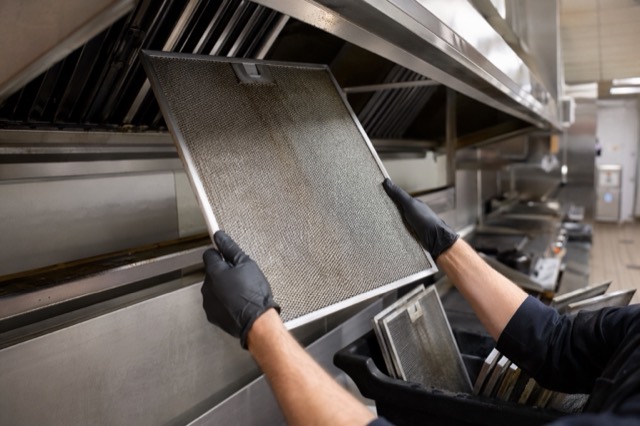
- Filters and Baffles
- Check whether components can be removed, grease buildup, deformation, and clogging. The method must be appropriate for the material and the handling instructions.
- Range Hood Unit
- We check for grease buildup inside, as well as the lighting, switches, and areas that can be cleaned. We do not touch electrical components or rotating parts.
- Kitchen ducts
- We check the location of the inspection opening, the route, buildup inside, and the scope of work and protective covering. A preliminary inspection may be required depending on the structure.
- Exhaust Fan and Exhaust Outlet
- Check for unusual noise, vibration, operating conditions, and installation location. Consult a specialist for disassembly or electrical work.
Exhaust and Ventilation / 02
Clearly define the scope of work in the estimate.
A label such as “kitchen exhaust cleaning” may not make clear whether the work covers filters, the inside of the hood, ducts, or fans. Check the estimate for the equipment covered, scope of work, excluded areas, protection and restoration, and how waste oil and wastewater will be handled.
The method for work inside ducts depends on whether access panels are available, the duct route, and the work conditions at the store or building. If you have equipment drawings or previous reports, sharing them along with any permission requirements from the property manager or building owner will help us assess the work.
Exhaust and Ventilation / 03
What to Organize Before Requesting Service
Please share whatever you know about smoke, odors, extraction performance, the type of cooking, how often filters are cleaned, unusual fan noises, equipment location, and your preferred dates. If available, please also provide the hood or fan model, duct drawings, or photos to the extent you can share them.
We will also confirm in advance the hours when work can be carried out, kitchen equipment shutdown and protection requirements, entry procedures, and how to check equipment operation after the work. We will explain the scope of work and costs based on the conditions at each store and building.
FAQ / QUESTIONS
Frequently Asked Questions
If I have my range hood cleaned, will the ducts be cleaned too?
Range hoods and ducts are separate equipment scopes. Cleaning only the hood or filters does not necessarily include cleaning inside the ducts. When requesting an estimate, confirm which areas are included and excluded.
What information should I provide if smoke extraction is weak?
Please share what you know about where and when the symptoms occur, cooking activities, filter condition, unusual fan noises, and equipment location. Do not disassemble equipment or check electrical components; consult a qualified contractor.
The information presented is general guidance to help organize the conditions at your store. We will advise on whether work can be carried out, the method, and the cost after confirming the equipment specifications, contract, region, and on-site conditions. In an emergency or if there is a hazard, follow the store’s official safety and hygiene procedures and the facility manager’s instructions first.