
Floors & Safety / 01
First, identify where the floor is slippery and the conditions that cause it
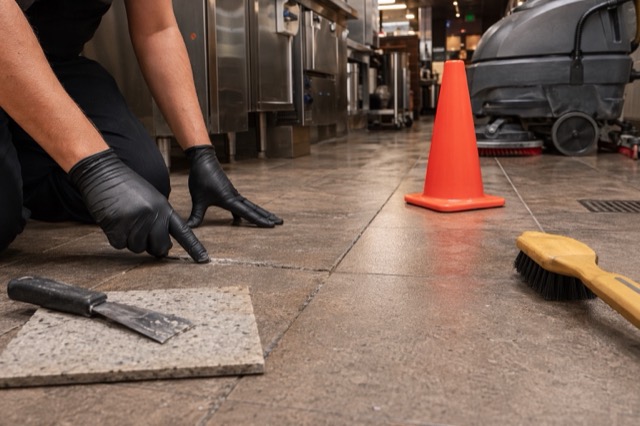
When a kitchen floor is slippery, check where and when it happens, how the floor gets wet, and its proximity to cooking equipment. Recording whether it occurs in the same place, only after cleaning, or after a particular task can help identify the cause.
If there is a risk of slipping, follow the store’s safety procedures to mark off the area and notify the person responsible for operations. Do not add a strong cleaner or mix chemicals if the cause is unknown.
- Extent of slippery areas and times when it occurs
- Conditions of the floor surface, such as oil, water, and detergent
- Condition of the flooring material, grout, and drains
- Routine cleaning methods and chemicals used
Floors & Safety / 02
We assess the flooring material, soiling, and drainage separately.
The checks differ depending on whether there is noticeable oil film or hardened buildup, or whether detergent or moisture remains after cleaning. The detergents and equipment that can be used depend on the floor material and surface treatment, so avoid using abrasives or strong alkaline cleaners if the material is unknown.
If drainage is slow, water remains in the joints, or the floor is uneven or peeling, a separate inspection or repair may be needed in addition to floor cleaning.
- Oil film and dark stains
- We check the extent of the soiling, how firmly it is stuck, and its proximity to cooking equipment and exhaust systems.
- Slipperiness after cleaning
- Check the rinsing, draining, and drying procedures, as well as detergent dilution and suitability labeling.
- Standing Water or Poor Drainage
- We’ll check drainage channels, slopes, clogs, and equipment issues, and share our findings with the facility manager.
- Floor damage
- Record the locations of peeling, cracks, lifting, and uneven areas, and discuss cleaning and repairs separately.
Floors & Safety / 03
Information that can help us assess your inquiry
Please let us know the store, the type of flooring if known, where the floor feels slippery, when it occurs, and how drainage is working. If you have site photos, check your store’s information-handling rules and share them only if they do not show personal or confidential information.
When preparing a cleaning estimate, we need to check details such as the floor area and condition, whether fixtures need to be moved, the scope of drain cleaning, and your preferred work hours. We will advise you individually after hearing about the work, including whether an on-site assessment is needed and whether repairs beyond cleaning are involved.
FAQ / QUESTIONS
Frequently Asked Questions
What should I check first if the floor is slippery?
Please record, as far as you can, where and when floors are slippery, how wet the floor is, the flooring material, and the condition of the drainage. If there is a risk of falls, follow your store’s safety procedures, do not mix chemicals or add stronger detergents, and inform the person in charge.
Will floor cleaning always improve slipperiness?
It may not necessarily improve the condition. In addition to oil, residue from cleaning agents or water, deterioration of the flooring, or poor drainage may be factors. We will assess the condition and determine separately whether cleaning, inspection, or repairs are needed.
The information presented is general guidance to help organize the conditions at your store. We will advise on whether work can be carried out, the method, and the cost after confirming the equipment specifications, contract, region, and on-site conditions. In an emergency or if there is a hazard, follow the store’s official safety and hygiene procedures and the facility manager’s instructions first.