
GUIDE / 01
Differences in Roles
A grease trap collects grease and residue, while drain pipes carry wastewater onward. Depending on how the kitchen is used, buildup can occur in both.
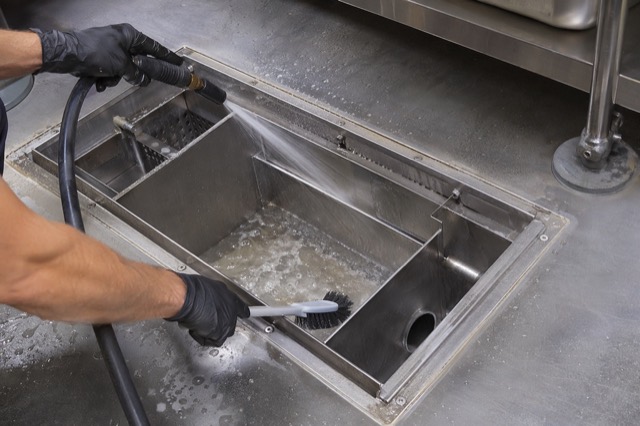
- Grease trap cleaning covers buildup inside the tank, in the basket and partitions, and around the tank.
- Drain pipe cleaning addresses dirt inside pipes that can cause slow drainage, clogs, and odors.
- Checking drain openings, U-shaped channels, and drain grates together can make it easier to identify the cause.
GUIDE / 02
Priority response items
If odors are strong, drainage is poor, or clogs recur, we will use the symptoms and photos to determine what work is needed first.
- If there is a strong odor or heavy soiling around the tank, start by checking the grease trap.
- If several drains are slow, we also check the drainage pipes.
- If the problem recurs, we review how to divide responsibilities between regular cleaning and day-to-day management.
GUIDE / 03
Related Official Information
Ensuring Compliance with Waste-Generating Business Operators’ Responsibilities
Waste Management and Public Cleansing Act
Even when you entrust the work to us, there are regulations your store should be aware of. Please confirm any final decisions with the relevant government agency, local authority, public health center, fire department, or specialist.
Official information for confirming responsibility for handling waste generated by business activities.
You can check the text of the Waste Management and Public Cleansing Act through the law search service.
GUIDE / 04
Work commonly requested alongside grease trap and drain pipe services
Drain Clogs and Flow
Cleaning Frequency
Kitchen Grease Trap Cleaning
Kitchen Equipment
Kitchen odor control
When a restaurant drain flows slowly, smells, or backs up, we explain the order in which to check the drain opening, U-shaped channel, grease trap, and drainpipe, as well as when to consult a professional.
We help you determine how often to clean restaurant grease traps based on grease volume, seating capacity, operating days, odors, clogs, and pest risk.
For restaurant grease trap cleaning, you can ask us about odors, clogs, grease and sludge, pest activity, and coordinating the work with drainpipe and kitchen floor cleaning.
GUIDE / 05
Send us your store details to request a quote
When consulting us about grease traps and drain pipes, please share what you can about the number of locations, areas requiring work, and your preferred timing. We will review the details and advise you what information is needed for an estimate.
QUESTIONS / FAQ
Questions about grease traps and drain pipes
What should I check first when drainage is slow?
First, we’ll ask where drainage is slow, whether there is an odor or backflow, and what time of day the issue occurs. We’ll identify whether the grease trap, drain, U-shaped gutter, or drainpipe is affected and determine what cleaning can address. Send us the number of stores, the areas to be serviced, and convenient work times to request a quote.
Should I request grease trap cleaning or drain pipe cleaning?
If there is a strong odor or heavy soiling around the tank, check the grease trap; if several drains are slow, check the drain pipes. The symptoms may be related, so we review photos and when the issue occurs, then set practical priorities.
What should I do if drain clogs or odors keep returning?
After a one-time cleaning to remove heavy buildup, you can determine the cleaning frequency by monitoring how quickly it returns. Reviewing the grease trap, drains, kitchen floor, and pest control together can help identify areas prone to recurring problems. Send us the number of stores, work areas, and times that are convenient for the work to request an estimate.