
SIGNS / 01
Grease Trap Issues
Grease trap symptoms and equipment conditions vary depending on the model, installation environment, and store operations. The following are examples to help clarify the situation when you contact us. If there is a safety risk, follow the store or facility's safety procedures before carrying out work or taking photos.
Odor Returns After Cleaning
In addition to the tank, dirt may remain in drains, floor drains, U-shaped gutters, pipes, or surrounding floors. Check where and when the odor occurs.
Grease and residue are increasing
We check the tank’s shape, basket, lid operation, and daily waste-removal method, then clarify which tasks the store can handle and which to request.
Concerned about slow drainage or pests
The drainage route and surrounding conditions may also be relevant. As needed, we’ll check the location and frequency of the issue and routine cleaning practices alongside other equipment.
BEFORE CONSULTATION / 02
Please provide whatever information you can before your consultation.
Please tell us whatever you know about the grease trap, such as its location, shape, size, and the condition of its cover. If an on-site inspection or additional information is needed, we will advise you after learning more about the situation.
- Tank location, shape, size, and lid condition
- Times when odors are noticeable and slow drainage
- Routine cleaning frequency and date of the last specialist service
- Photos of the tank, drain, kitchen floor, and U-shaped gutter
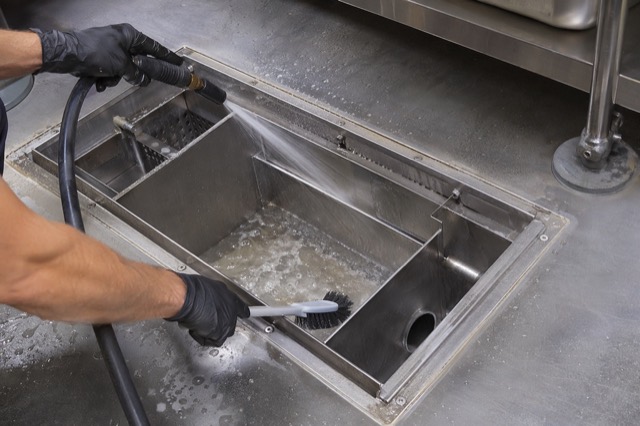
Cleaning inside the tank, washing drain pipes, and removing and disposing of collected waste are separate scopes of work. When requesting an estimate, confirm the work areas, how collected waste will be handled, and any facility, local, or contractual requirements.
Whether work can be carried out on a grease trap, as well as the method, schedule, and cost, will be advised after checking the equipment’s condition and the conditions of the location, region, contract, and facility.
QUESTIONS / 03
Frequently Asked Questions
Why do odors return even after the grease trap has been cleaned?
The cause of the dirt or odor may be outside the tank—in drains, floor drains, U-shaped gutters, pipes, or surrounding floors. We check and record where and when the odor occurs, and how long it takes to return after cleaning.
Does tank cleaning include washing the drain pipes?
The work may not be the same. In quotes, check which areas are covered separately—the inside of the grease trap, drain openings, grates, U-shaped channels, and pipes—and confirm how recovered waste will be handled.